
Cobb County Arrest Warrants Explained
Georgia lets a Superior, State, Magistrate, city, or other authorized municipal judicial officer issue an arrest warrant on probable cause supported by oath. In Cobb County, a lot of preliminary criminal work starts in Magistrate Court. If the case is later bound over to State or Superior Court, the warrant travels with the original file. That movement is why one search tool often shows only part of a warrant record. An arrest warrant authorizes custody for an alleged offense. A sworn complaint, an affidavit, and the judge's finding support its issuance, while the charge itself gets sorted out in later court proceedings. Sealed warrants and active investigative records may stay closed. Anyone checking a Cobb County arrest warrant in their own name should confirm the number, the court, the charge, and the status before acting.
Cobb Magistrate Probable-Cause Review
The Cobb County Magistrate Court Warrant Division, at 32 Waddell Street in Marietta, handles warrant applications and preliminary criminal process. When law enforcement applies, sworn facts go to a judge for review. A private applicant usually gets a warrant-application hearing unless an exception applies. Under HB 1131, procedures effective July 1, 2026 also require personal service of notice for a civilian warrant-application hearing, paid at the applicant's expense. The public Warrant Division page posts the applicant-side costs: a $20 warrant fee, a $7.50 alternative dispute resolution charge, a $5 law-library charge, and an optional $10 Sheriff service. Those figures do not tell a person named in a warrant what bond or resolution will cost. Call (770) 528-8900 for current Warrant Division routing.
Inside a Cobb County Arrest Warrant
Official Magistrate calendars reveal the local record schema without acting as a full warrant roster. A single entry can carry the hearing type, date, courtroom, warrant number, attorney, witness, police agency, charge counts, offense text, felony or misdemeanor class, and a probable-cause or bond label. Cobb County warrant numbers in those records follow a year-W pattern such as 26-W-####. That string is an example, not a live record.
| Warrant number | Local identifier used to route the warrant record. |
|---|---|
| Police number | Agency identifier that may follow a different format. |
| Charge and class | Alleged offense, count, and felony or misdemeanor notation. |
| Issuing court | Venue whose judicial officer authorized the warrant. |
| Hearing details | Probable-cause, bond, date, room, and judge context. |
| Bond information | May be absent and must be confirmed with the court or Bonding. |
Cobb Arrest Cases Can Lag
Timing explains many gaps. A new warrant can exist before any case is filed in State Court. Magistrate Court keeps the preliminary arrest-warrant and probable-cause records, and if a charge is bound over, the original warrant moves to the proper trial-court file. CourtConnect therefore works best for filed misdemeanors and later-stage records. A missing result still does not prove there is no Cobb County warrant.
Search limit: Check Magistrate Court, the trial court, and the Sheriff's Warrant Information line before treating a blank portal result as clearance.
City arrest warrants add another layer. Marietta Police, for one, names a warrant officer who serves city arrest warrants. A city-held case may never show up in Cobb County State Court unless it binds over.
Serving Arrest Warrants in Cobb County
The Cobb Sheriff's Warrant Section processes and executes criminal arrest warrants. Staff enter each warrant in an internal database, verify identity and criminal history, may place wanted-person data in NCIC, and route service to uniform deputies or the Fugitive Section. FAST handles high-risk warrants and transports. SWAT can assist with high-risk service and drug-search warrants. None of that turns the public site into a complete online roster. A city police department may serve its own arrest warrant, and other authorized agencies can act on an entered warrant. After arrest, the person faces booking, a probable-cause or bond hearing, and transfer of the case to the proper trial court. Service completes the custody order. It does not decide the charge.
Cobb Sheriff Warrant Pipeline
The Sheriff's Field Operations page says the Warrant Section receives more than 28,000 criminal warrants in an average year. That figure is annual intake, not a count of active warrants or unique people. It shows why direct confirmation matters for any Cobb County warrant check, and the official court-system view below maps where cases can move.
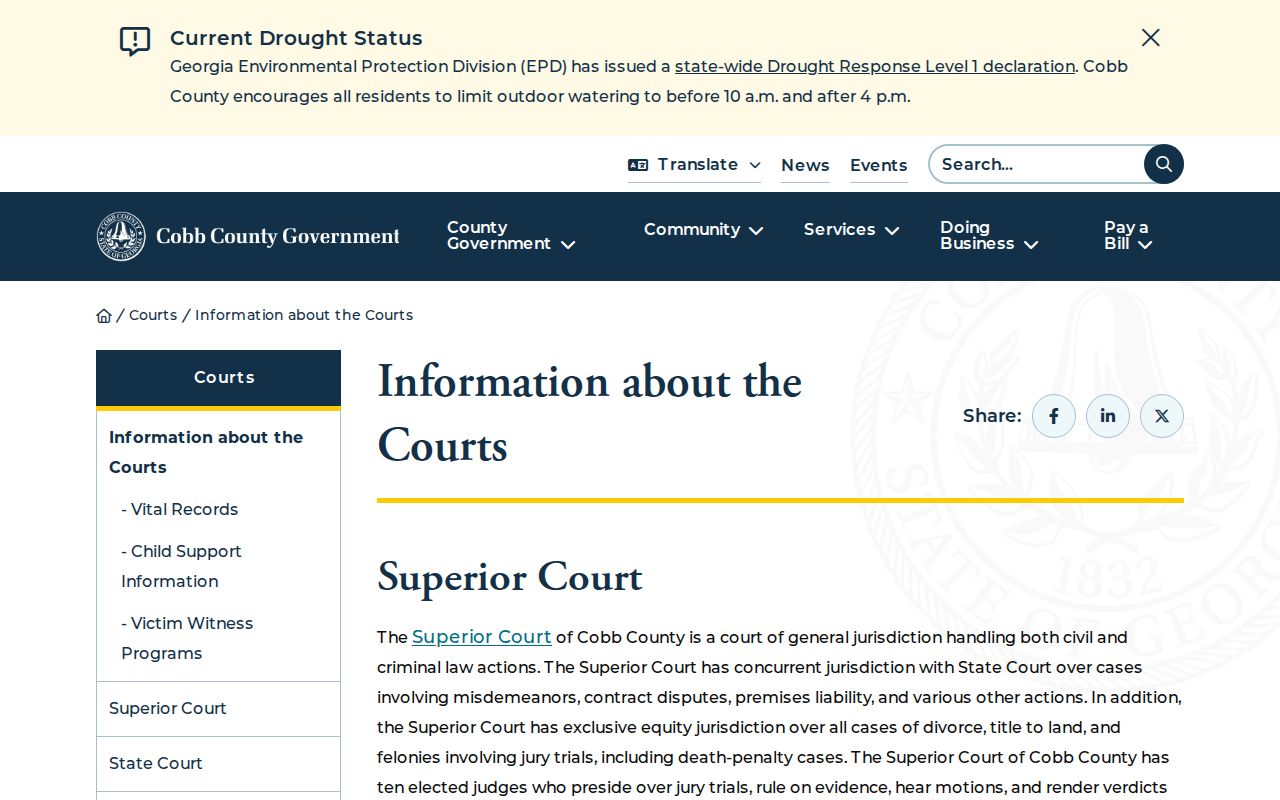
The court hierarchy separates Magistrate preliminary work, State Court misdemeanors, Superior Court felonies, and municipal cases. Follow that path. One database will not cover every Cobb County arrest warrant.
Comparing Arrest, Summons, and Bench Warrants
Each tool calls for a different response. An arrest warrant authorizes immediate custody on probable cause. A summons or citation directs a person to appear without ordering arrest first. A bench warrant answers a missed appearance or another failure inside an existing Cobb County case.
| Feature | Arrest warrant | Summons | Bench warrant |
|---|---|---|---|
| Basis | Sworn probable cause | Charge with directed appearance | Missed duty or court order |
| Immediate command | Take the person into custody | Appear on the set date | Bring the person before court |
| Typical response | Counsel, surrender plan, booking, bond | Timely appearance | Reset, recall request, appearance, or bond |
| Case effect | Starts or advances a criminal case | Starts a case without initial custody | Reopens compliance in an existing case |
For missed-court procedure, use the Cobb County bench warrant search route.
Cobb County Pretrial Release Routes
Cobb Pretrial Court Services may recommend conditional release, personal recognizance, a bond reduction, or a 10 percent cash deposit. A judge must approve any release. Sureties face stated residency, identification, age, and eligibility rules, and processing runs on set hours. The official Pretrial page lays out the current instructions for Cobb County defendants and families.
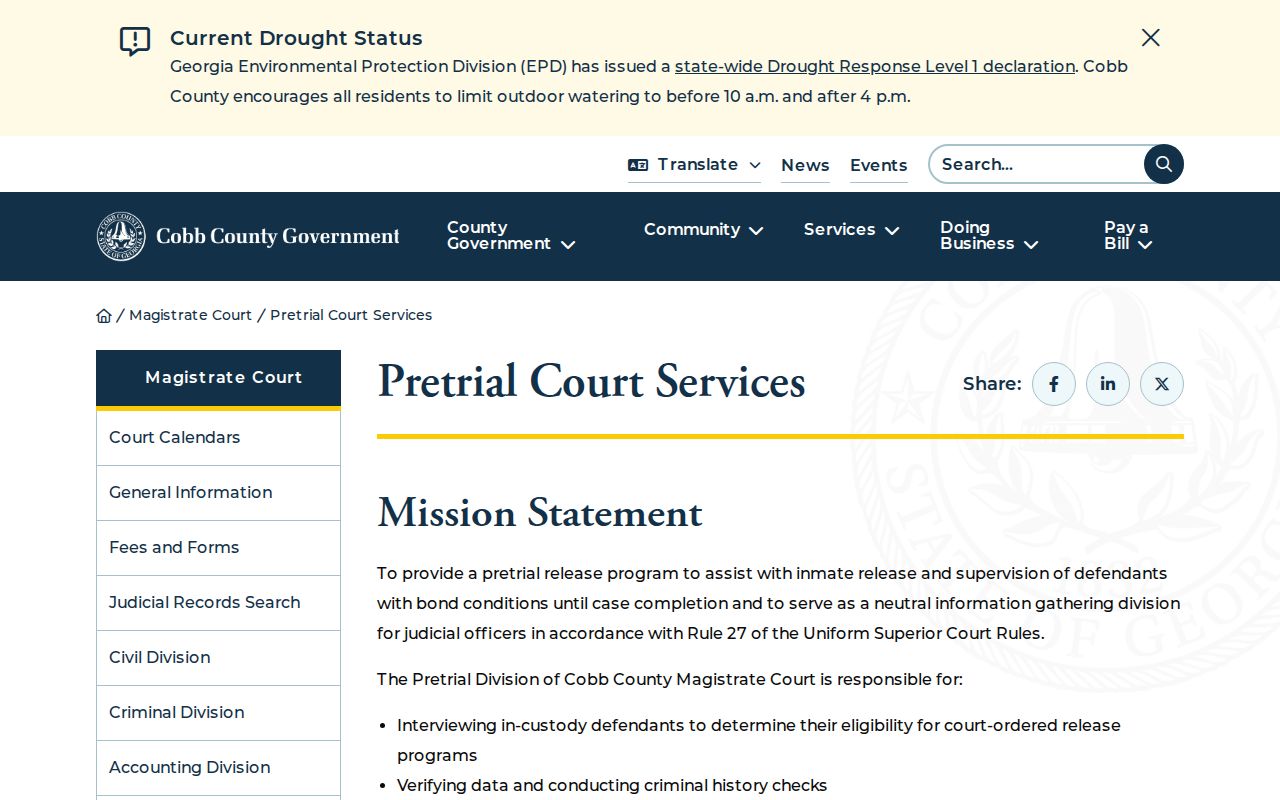
Release settles custody conditions, nothing more. It does not resolve guilt or dismissal, and the person must still meet every future date and case term. The detention-center information also helps a person confirm the correct Cobb County facility.
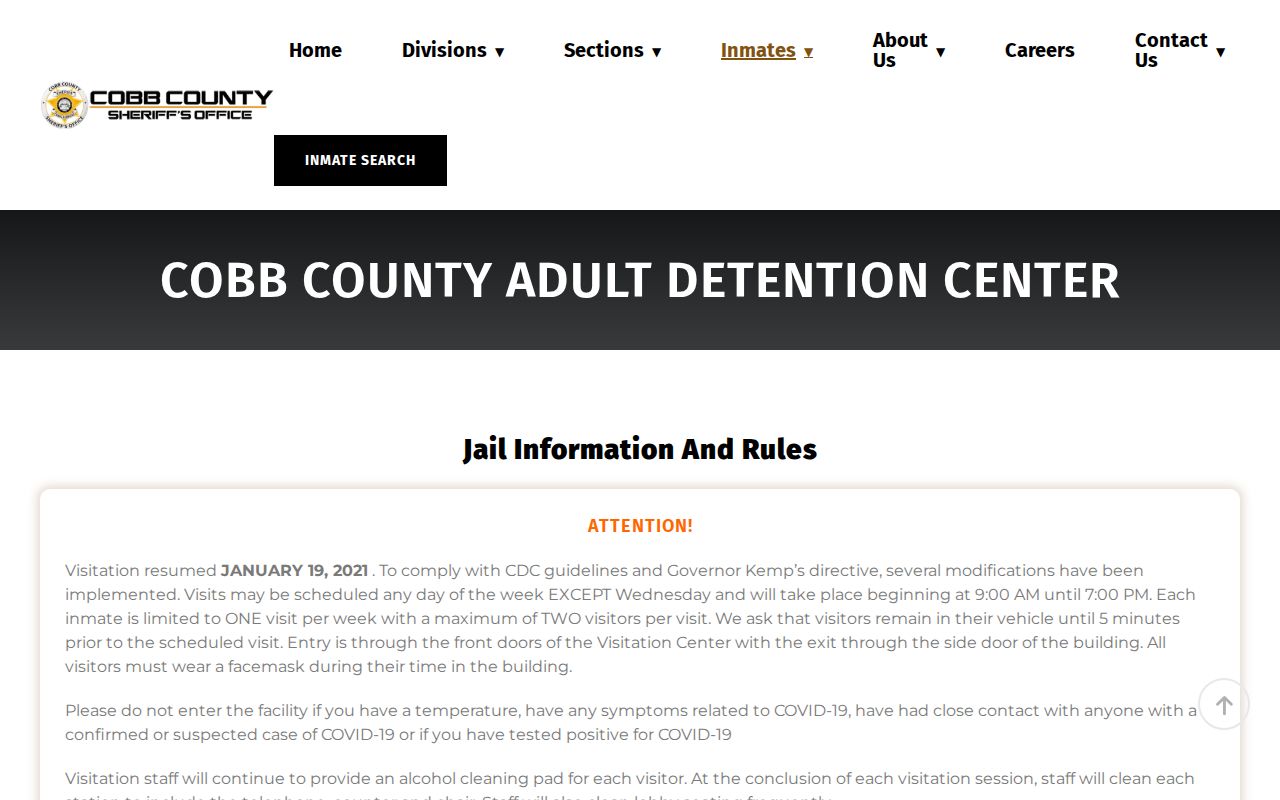
Call ahead because Cobb publishes no universal walk-in surrender schedule.
If There's an Arrest Warrant for You
A warrant in your own name is serious. Get a lawyer involved. Then get live confirmation. Pin down the venue with the Magistrate record entry, the State Court filing, the issuing city court, or the warrant number. Then call the Cobb County Sheriff's Warrant Information line at (770) 499-4634, or the issuing clerk itself. Ask whether the matter is bondable, whether an attorney-guided walk-through is possible, and where the person must report; don't arrive at jail on a general web instruction.
- Confirm identity, warrant number, issuing court, and alleged charge.
- Ask an attorney to check for sealed filings and current bond terms.
- Arrange voluntary surrender, booking, and bond through the named office.
- Keep every receipt, release paper, and future court date.
- Verify the warrant was served or closed in each relevant system.
Important: An active Cobb County arrest warrant can lead to custody during police contact; get legal advice before arranging surrender or bond.
Cobb County State Court Records
The State Court Clerk in Cobb County holds the filed misdemeanor, traffic, and civil records. The live search runs deep. Criminal and civil selectors let you query phonetic name, last and first names, middle name, birth year, filing dates, case number, and some citation and tag fields, behind a reCAPTCHA and Submit. Warrant detail is missing. There is no warrant-type, status, court, or bond filter. The State Court Clerk page names its record and custodian route.
Email the Cobb County clerk at StateCourtRecords@cobbcounty.gov when the online file needs context. Georgia law can keep active investigations, sealed material, juvenile information, and protected identifiers unavailable.
Cobb County Arrest Warrant Confirmation
When Cobb County posts no online answer, work the official fallback chain. Call the Magistrate Warrant Division first. It handles the preliminary warrant process. The proper State or Superior Court clerk covers a filed case. The city court handles a municipal one. The Cobb County Sheriff's Warrant Information line can tell you whether its section holds the order. A narrow request through Sheriff GOVQA or the county Open Records Center may obtain a record that isn't posted. Before you call, gather details. Have the complete legal name, date of birth, any possible warrant or case number, the alleged issuing agency, and the approximate date ready. Ask the custodian to separate a current warrant from an old calendar entry. Also ask whether the record is sealed, under active investigation, or already transferred. Georgia law allows lawful redaction and withholding. A limited response is not proof there's no warrant.